
interactions Case
On this page, I will analyse an instance of my communication with two British team member on WhatsApp. I will focus mainly on my semiotic choices in this context, including my language organisation, the form of my messages, and my use of emojis.
About
Context
The main topic of this conversation is me discussing the meeting times with my group member from a project assessment. I also conveyed information related to the group project. This conversation took place on ‘WhatsApp’. The entire conversation took place in a group chat involving the four of us. There are four people in our group, but we come from different cultural backgrounds.
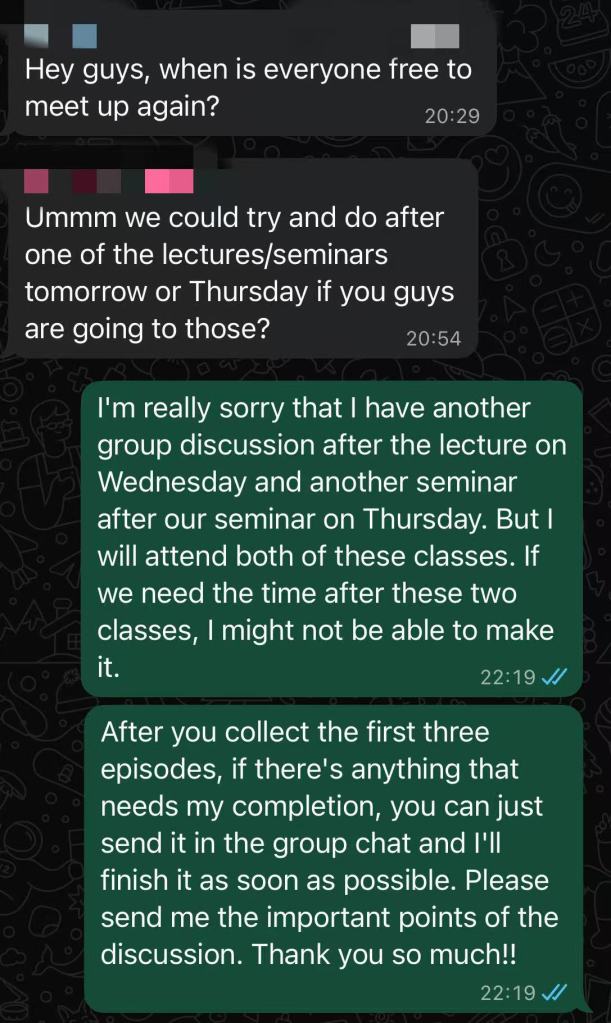
Firstly, our group uses English as our primary language of communication. This is because apart from me is Chinese, the others are native English speakers. English is the only language that every member of the group is familiar with. Also, because we are studying in the UK, so we all communicate in English. The language we use for communication is their mother tongue. Therefore, I must be quite careful when communicating to avoid any misunderstandings or unclear expressions.
This chat is about the course project, not casual talk. So, I usually expression use complete and relatively formal sentences. For me, I don’t have many opportunities to chat with foreigners on social media in my daily life. So, I can’t communicate quite naturally as a native speaker. To ensure my group members can quickly and clearly grasp my intentions, I also edit everything I want to say into one message. If I sent each sentence separately, others might start replying before I’ve even finished sending everything. This could lead to misunderstandings.
I always try to keep a polite tone when chatting. I believe that tone is very important when working with others. I often use expressions like ‘maybe we can’ to present my ideas and suggestions. This way, people don’t feel like they’re being ordered. That can let them feel respected.
In formal, I really like using emojis. However, the same emoji can convey different meanings in Chinese and Western cultures. So, I always avoid using emojis when communicating with western people. This can avoid some misunderstanding of what I actually mean.
Reflection
After analyzing this conversation, I noticed many characteristics in my speaking style in this context. In fact, it’s very different from how I chat with my Chinese friends in casual chat. Take all the change together, made my expressions sound completely different. For example, I used full sentences in English, included punctuation in every sentence, and used polite phrases. All of this made me seem quite different from my casual chat.
However, I realized that this style of expression might be a little bit unnatural. If I want to better integrate into this kind of communication, I should continue to observe and learn from the way native speakers express themselves. I need to keep adjusting before identify my shortcomings, so that I can engage in cross-cultural communication more successfully.

